 ZENDER
1、Spring中的基本概念-BeanDefinition(Bean的定义)
1、Bean
被Spring管理的对象叫做Bean。
2、BeanDefinition(Bean定义)
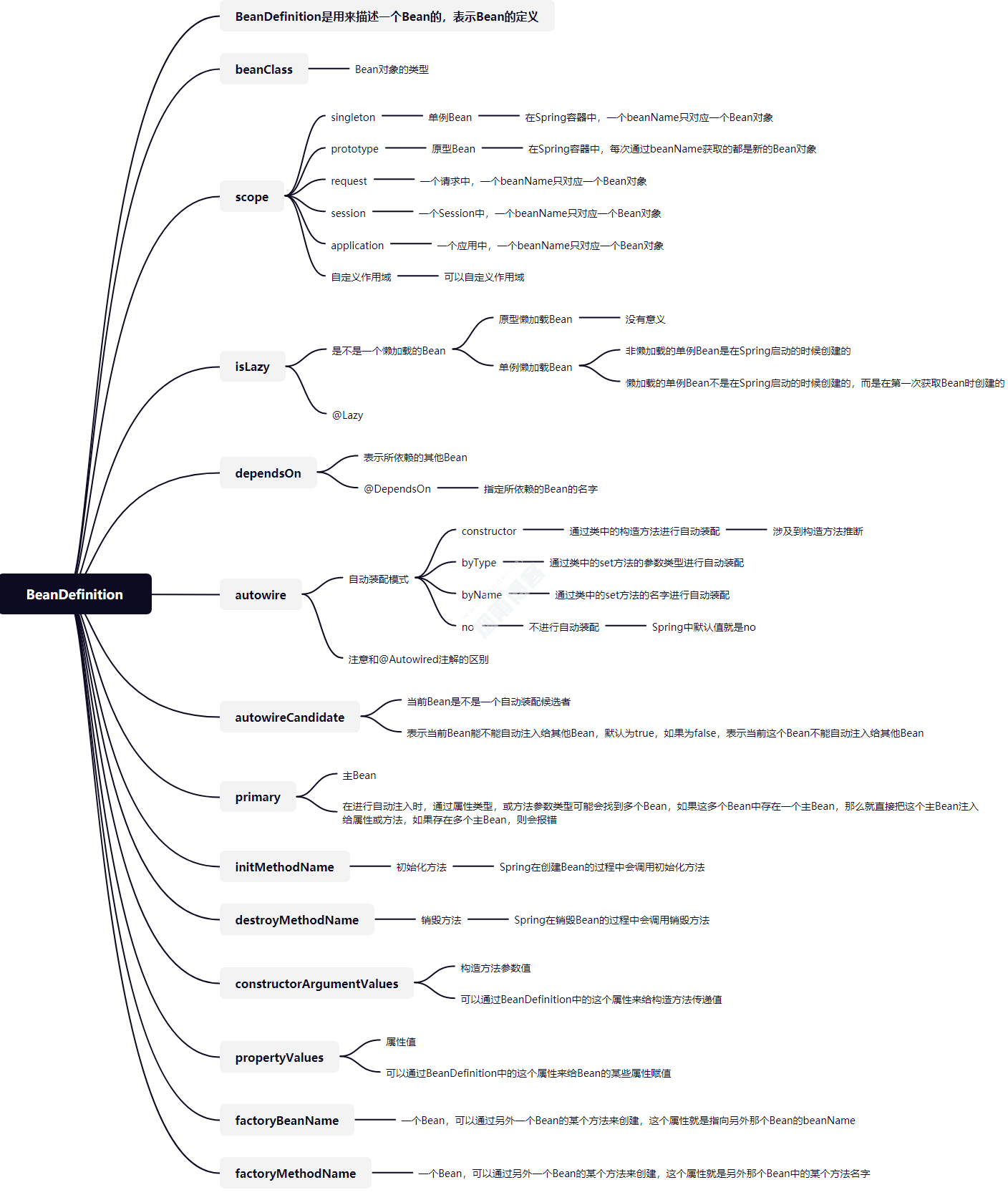
BeanDefinition是用来描述一个Bean的,表示Bean的定义。
BeanDefinition是一个接口,定义了一系列Bean所需要的东西。接口定义如下:
public interface BeanDefinition extends AttributeAccessor, BeanMetadataElement {

	/**
     * 单例bean,在Spring容器中,一个beanName只对应一个Bean对象。
     * Scope:singleton
	 */
	String SCOPE_SINGLETON = ConfigurableBeanFactory.SCOPE_SINGLETON;

	/**
     * 原型bean,在Spring容器中,每次通过beanName获取的都是新的Bean对象。
	 * Scope:prototype
	 */
	String SCOPE_PROTOTYPE = ConfigurableBeanFactory.SCOPE_PROTOTYPE;


	/**
	 * Role hint indicating that a {@code BeanDefinition} is a major part
	 * of the application. Typically corresponds to a user-defined bean.
	 */
	int ROLE_APPLICATION = 0;

	/**
	 * Role hint indicating that a {@code BeanDefinition} is a supporting
	 * part of some larger configuration, typically an outer
	 * {@link org.springframework.beans.factory.parsing.ComponentDefinition}.
	 * {@code SUPPORT} beans are considered important enough to be aware
	 * of when looking more closely at a particular
	 * {@link org.springframework.beans.factory.parsing.ComponentDefinition},
	 * but not when looking at the overall configuration of an application.
	 */
	int ROLE_SUPPORT = 1;

	/**
	 * Role hint indicating that a {@code BeanDefinition} is providing an
	 * entirely background role and has no relevance to the end-user. This hint is
	 * used when registering beans that are completely part of the internal workings
	 * of a {@link org.springframework.beans.factory.parsing.ComponentDefinition}.
	 */
	int ROLE_INFRASTRUCTURE = 2;

	/**
	 * 设置此bean定义的父定义的名称(如果有)
	 */
	void setParentName(@Nullable String parentName);

	/**
	 * 获取此bean定义的父定义的名称(如果有)
	 */
	@Nullable
	String getParentName();

	/**
	 * 指定此bean定义的bean类名。
	 * 在bean factory后期处理过程中可以修改类名,
	 */
	void setBeanClassName(@Nullable String beanClassName);

	/**
	 * 获取此bean定义的bean类名
	 */
	@Nullable
	String getBeanClassName();

	/**
	 * 设置bean的目标作用域
	 */
	void setScope(@Nullable String scope);

	/**
	 * 获取bean的目标作用域
	 */
	@Nullable
	String getScope();

	/**
	 * 设置是否懒加载
	 */
	void setLazyInit(boolean lazyInit);

	/**
	 * 获取是否懒加载
	 */
	boolean isLazyInit();

	/**
	 * 设置此bean依赖于初始化的bean的名称。
	 * bean工厂将保证首先初始化这些bean。
	 */
	void setDependsOn(@Nullable String... dependsOn);

	/**
	 * 返回此bean所依赖的bean名称数组
	 */
	@Nullable
	String[] getDependsOn();

	/**
	 * 设置当前Bean是不是一个自动装配候选者。默认为true,如果为false,表示当前这个Bean不能自动注入给其他Bean。
	 */
	void setAutowireCandidate(boolean autowireCandidate);

	/**
	 * 获取当前bean是不是一个自动装配候选者。
	 */
	boolean isAutowireCandidate();

	/**
	 * 设置当前bean是否是一个主bean.
	 * 在进行自动注入时,通过属性类型,或方法参数类型可能会找到多个Bean,如果这多个Bean中存在一个主Bean,那么就直接把这个主Bean注入给属性或方法,如果存在多个主Bean,则会报错
	 */
	void setPrimary(boolean primary);

	/**
	 * 获取当前bean是否是一个主bean.
	 */
	boolean isPrimary();

	/**
	 * 一个Bean,可以通过另外一个Bean的某个方法来创建,这个属性就是指向另外那个Bean的beanName
	 */
	void setFactoryBeanName(@Nullable String factoryBeanName);

	/**
	 * 获取工厂beanName
	 */
	@Nullable
	String getFactoryBeanName();

	/**
	 * 一个Bean,可以通过另外一个Bean的某个方法来创建,这个属性就是另外那个Bean中的某个方法名字
	 */
	void setFactoryMethodName(@Nullable String factoryMethodName);

	/**
	 * 获取工厂方法名称
	 */
	@Nullable
	String getFactoryMethodName();

	/**
	 * 构造方法参数值属性,可以通过这个属性来给构造方法传递值
	 */
	ConstructorArgumentValues getConstructorArgumentValues();

	/**
	 * 判断当前bean构造方法是否有参数值
	 * @since 5.0.2
	 */
	default boolean hasConstructorArgumentValues() {
		return !getConstructorArgumentValues().isEmpty();
	}

	/**
	 * 属性值属性,可以通过这个属性来给Bean的某些属性赋值
	 */
	MutablePropertyValues getPropertyValues();

	/**
	 * 判断当前bean是否有属性值
	 * @since 5.0.2
	 */
	default boolean hasPropertyValues() {
		return !getPropertyValues().isEmpty();
	}

	/**
	 * 设置当前bean的初始化方法名称
	 * @since 5.1
	 */
	void setInitMethodName(@Nullable String initMethodName);

	/**
	 * 获取设置当前bean的初始化方法名称
	 * @since 5.1
	 */
	@Nullable
	String getInitMethodName();

	/**
	 * 设置当前bean的销毁方法名称
	 * @since 5.1
	 */
	void setDestroyMethodName(@Nullable String destroyMethodName);

	/**
	 * 获取当前bean的销毁方法名称
	 * @since 5.1
	 */
	@Nullable
	String getDestroyMethodName();

	/**
	 * 设置bean的分类
	 */
	void setRole(int role);

	/**
	 * 获取bean的分类
	 */
	int getRole();

	/**
	 * 设置当前bean的描述
	 * @since 5.1
	 */
	void setDescription(@Nullable String description);

	/**
	 * 返回当前bean的描述
	 */
	@Nullable
	String getDescription();

	/**
	 * 返回此bean定义的可解决的数据类型,可以通过这个属性来给Bean的某些属性赋值。
     * ResolvableType为所有的java类型提供了统一的数据结构以及API,换句话说,一个ResolvableType对象就对应着一种java类型。
     * 我们可以通过ResolvableType对象获取类型携带的信息(举例如下):
     *  	getSuperType():获取直接父类型
     *  	getInterfaces():获取接口类型
     *  	getGeneric(int...):获取类型携带的泛型类型
     *  	resolve():Type对象到Class对象的转换
	 */
	ResolvableType getResolvableType();

	/**
	 * 返回是否是一个单一的、共享的实例
	 * returned on all calls.
	 * @see #SCOPE_SINGLETON
	 */
	boolean isSingleton();

	/**
	 * 返回是否使用独立实例
	 * returned for each call.
	 * @since 3.0
	 * @see #SCOPE_PROTOTYPE
	 */
	boolean isPrototype();

	/**
	 * 返回这个bean是否是“抽象的”,也就是说,不是要实例化的。
	 */
	boolean isAbstract();

	/**
	 * 返回此bean定义所定义的资源的描述
	 */
	@Nullable
	String getResourceDescription();

	/**
	 * 返回原始BeanDefinition,如果没有,则返回{@code null}。
	 */
	@Nullable
	BeanDefinition getOriginatingBeanDefinition();
}
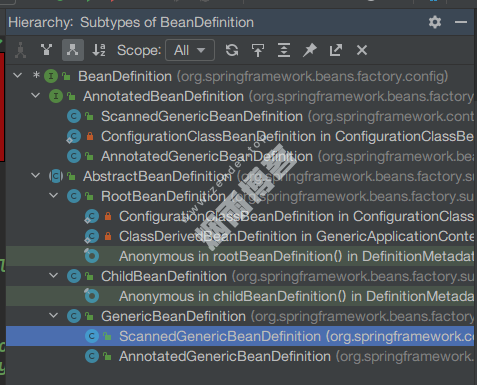
该接口的实现类:
版权声明
非特殊说明,本文由Zender原创或收集发布,欢迎转载。
相关文章


作者文章
- MyBatisCodeHelper-Pro3.3.6+2321破解 2年前 (2024-10-17)
- 网站迁移公告 2年前 (2024-10-10)
- Java项目防止SQL注入4总方式 3年前 (2023-09-06)
- JAVA开发小技巧--读取文件魔数来识别文件类型 3年前 (2023-08-24)
- 分类树菜单优化 3年前 (2023-08-22)
发表评论:
◎欢迎参与讨论,请在这里发表您的看法、交流您的观点。